
Last updated November 21, 2026
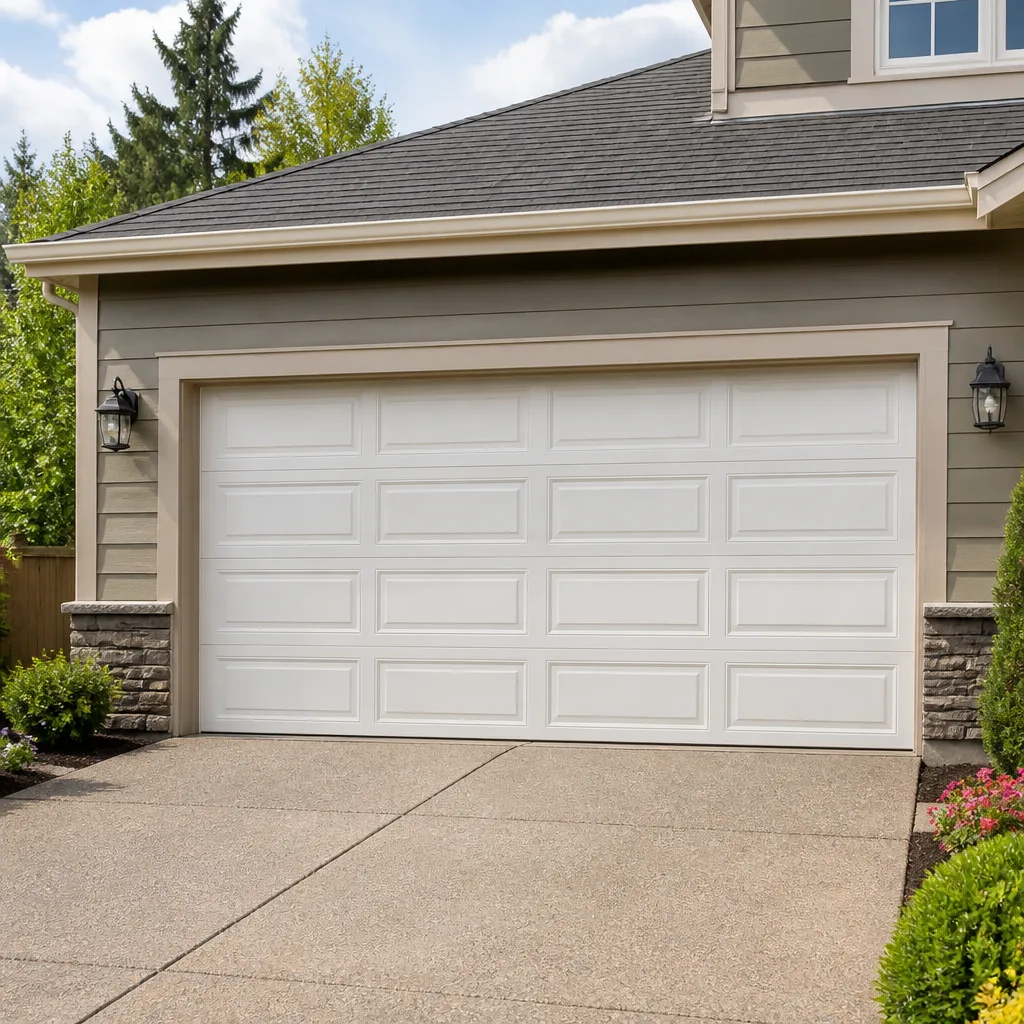 Raised-panel steel
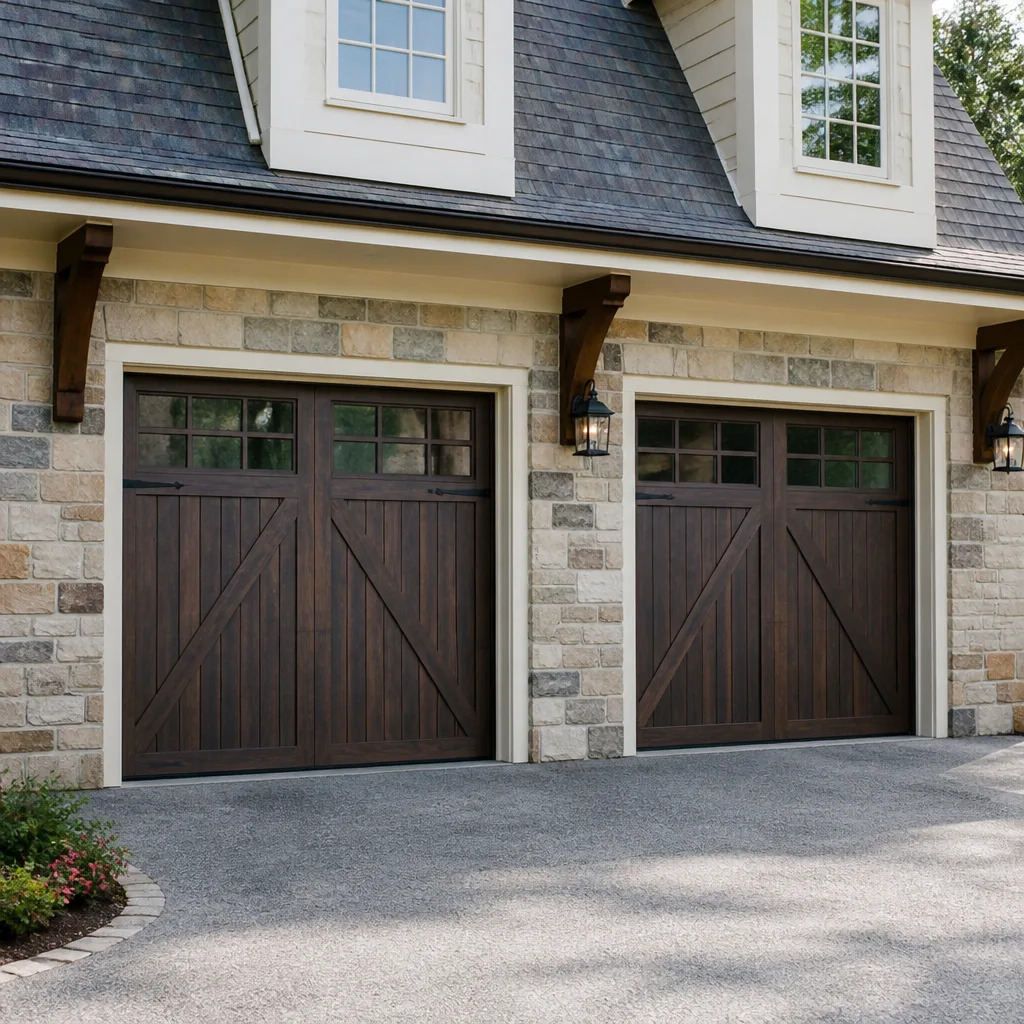 Carriage house
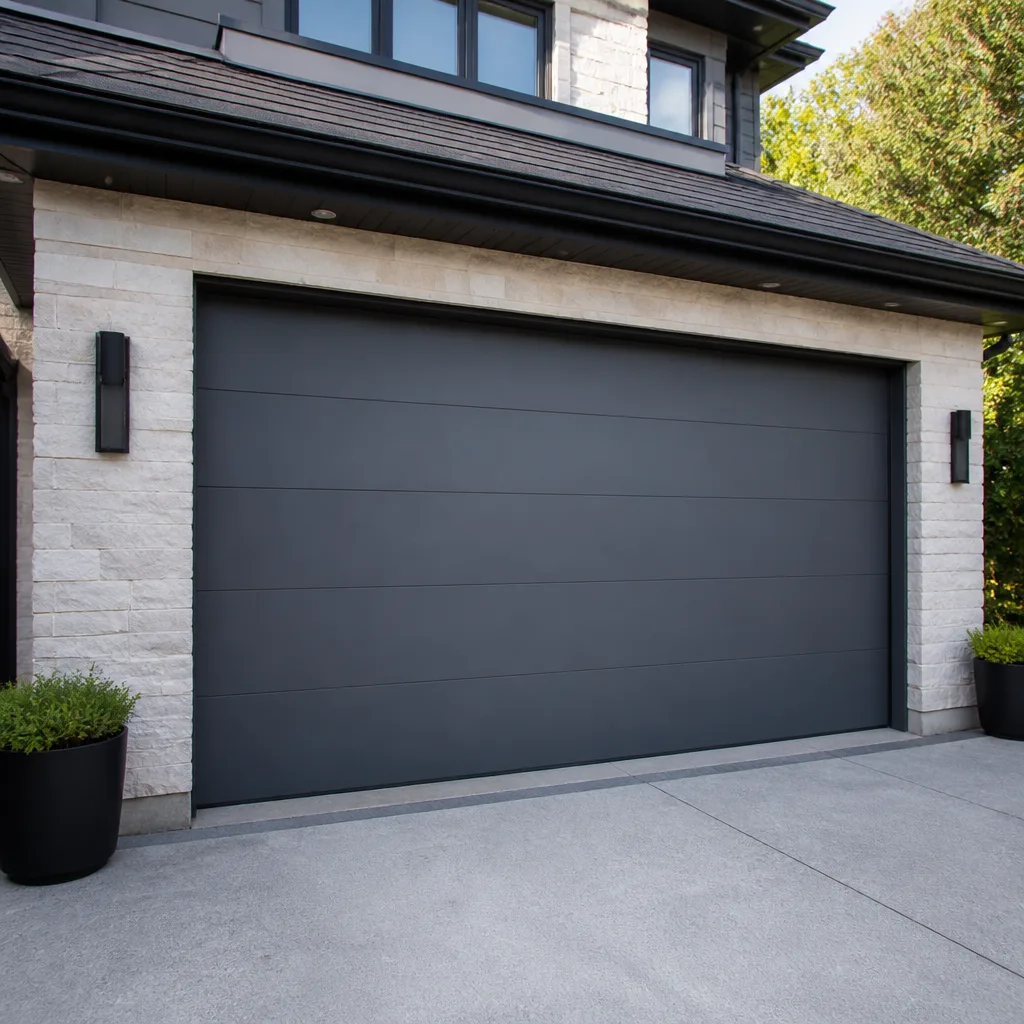 Modern flush
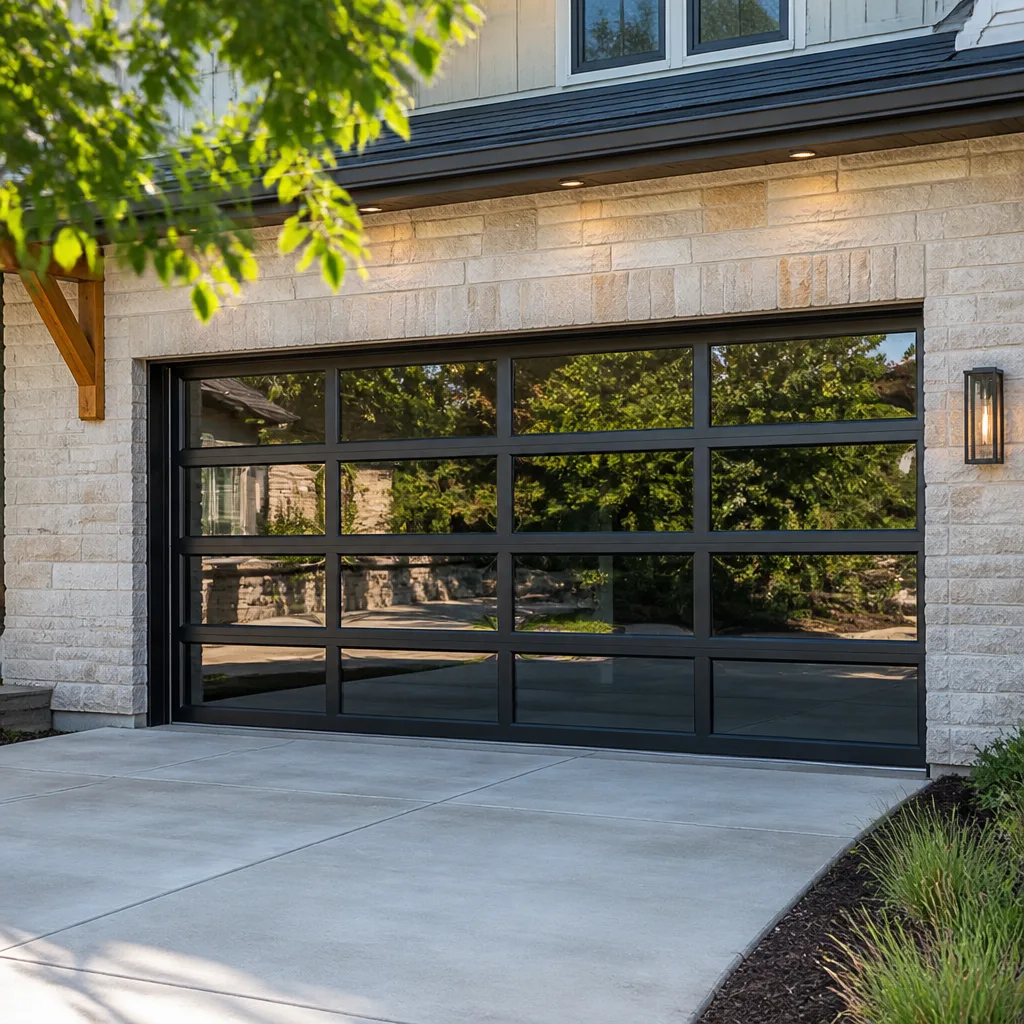 Full-view glass
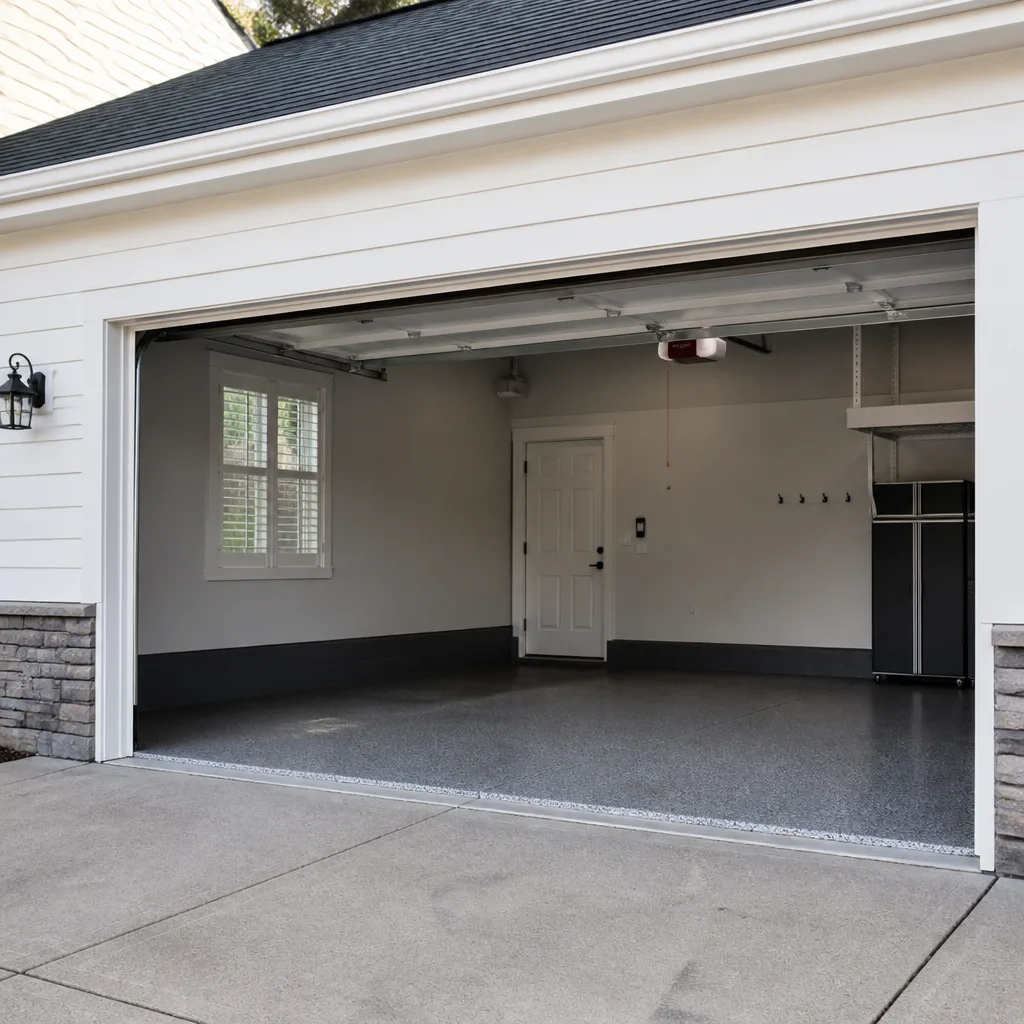 LiftMaster openers
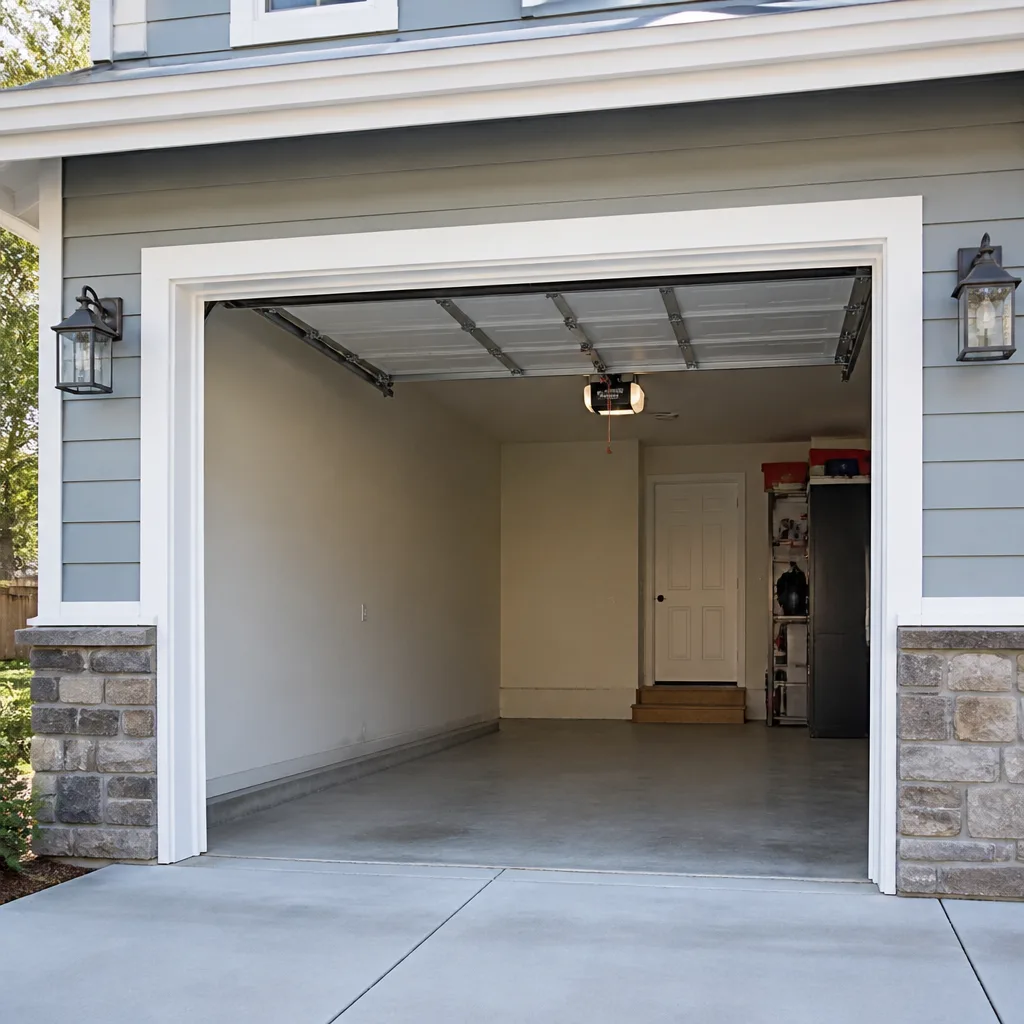 Chamberlain openers
Full 25-point door and opener safety check with every visit - springs, cables, rollers, tracks, and your LiftMaster or Chamberlain opener included
You get a price before we start. It does not change when the pro arrives.
Get your free estimateGarage Door Emergency Preparedness Guide for League City Homes
Most homeowners in League City think about their garage door in exactly one way: they press the remote button and it goes up. That single habit is the problem. A garage door is the largest moving piece of equipment attached to your house, and the day it stops working is almost never the day you have time to learn how it operates by hand. Our wet season, our long stretch of hot months, and the way new subdivisions have filled in around League City all change which failures are likely and which ones turn serious. This guide covers the scenarios people rarely plan for: losing power mid-storm, a door stuck open while a system is on the way, the manual release almost nobody has ever used, and how to decide whether a problem is a call-now emergency or a book-it-tomorrow repair.
Quick Answer
Garage door emergency preparedness in League City comes down to four things you can set up before anything goes wrong: know how to release the door manually and have that pull handle reachable from outside the car, know how to secure a stuck-open door with bracing or a manual slide lock rather than by forcing the opener, get a battery backup for your opener and test it on a schedule, and keep your door’s brand and your service phone number where you can find them without power. A damaged spring, a door hanging off a track, or a door that will not close and leave the house exposed are the situations that justify a real emergency call. The rest can usually wait for the next opening.
Styles & brands we work with
- Raised-panel steel
- Carriage house
- Modern flush
- Full-view glass
- LiftMaster openers
- Chamberlain openers
Table of Contents
- What to do when the power goes out
- How to release and operate your door by hand
- What to do when your door is stuck open during a storm
- Security risks of an open or partly open door
- Battery backup for League City’s outages and how to test it
- Getting ready before storm season each year
- What to tell us when you call in an emergency
- What counts as an emergency versus a next-day job
What to do when the power goes out
A power outage turns a garage door into a dead weight, and how you handle the first few minutes determines whether you end up with a bent panel or a door you can still move. The opener’s motor disengages from the door when you pull the release, so the door is not stuck; your car is just no longer able to lift it. The single most useful thing you can do in advance is make sure the manual release is easy to reach and understand in the dark.
Here is the sequence to follow once the lights go out:
- Confirm it is a power outage and not a tripped breaker or a dead opener. Check whether lights elsewhere in the house are on. If the rest of the house has power, the problem is the opener or its circuit.
- Do not pull the manual release with the door in a raised position. If the door is up and the opener is holding it, releasing it will let the door drop. Lower it all the way using the wall button or remote first if you can, then release.
- Pull the release handle down and away from the door, and confirm the carriage has disconnected from the rail before you lift anything.
- Lift the door by the handle with two hands and raise it about waist height. If it feels far heavier than expected, stop. A heavy door is a sign the spring is broken or failing, and you should leave it for a trained technician.
- Prop the door open with a firm brace if you need the car out, drive clear, and lower it slowly and under control. Never let the door fall.
Springs are the part of this system that hurts people. They are under extreme tension, and the hardware that holds them together can fail without warning. If you suspect a broken spring, do not attempt to lift, tie off, or remove any part of it; call a professional.
One more local note: League City power interruptions tend to arrive with a weather system, so the outage and the storm often overlap. Bring the car in first if the door is open and the weather is closing in, then deal with the opener.
How to release and operate your door by hand
Every garage door opener has a manual release, and almost every homeowner in League City has never used theirs. It is usually a red pull handle hanging from a cord attached to the opener carriage, and its job is to disconnect the door from the motor so you can lift it yourself. Practicing this during calm weather is the whole point of the exercise; the day you need it, you will have a flashlight in one hand and little patience.
Here is how to rehearse the manual release before you need it:
- Stand inside the garage with the door closed. Locate the release handle. If it hangs out of reach or has been tied up, untie it and let it hang so it is easy to grab.
- Pull the handle toward the door and down until the carriage separates from the rail. You should hear or feel a click.
- Lift the door by the handle and raise it to about knee height, then to waist height, checking how heavy it feels. A properly balanced door should lift with one hand from the waist up.
- Lower it slowly and let it close fully.
- Reconnect by pulling the release rope again or by running the opener, which re-engages the carriage automatically.
Write the word “release” in your head for the service call, too. There is no safe shortcut for a door that will not move because the opener arm is bent or the torsion tube has broken. The manual release is not designed to make a broken door operable; it is designed to disconnect a working door from a dead operator.
If your manual release ever gets stuck open, or the carriage will not re-engage, that is a mechanical problem with the opener, and it belongs on a scheduled service visit rather than a weekend project. A technician will usually diagnose it in a single visit, and garage door opener repair covers everything from a stuck carriage to a failed logic board. When the diagnosis is clear, we tell you the cause and the price before anything gets opened up.
What to do when your door is stuck open during a storm
A door that will not close as a weather system arrives is genuinely urgent because the house is open to wind and rain. The instinct is to force the door or stand there holding it. Neither is safe, and neither is necessary. There are safer ways to secure a stuck-open door until someone can look at it.
What actually works as a short-term measure:
- Manually lower the door: If the opener is the only failure, pull the manual release, lower the door by hand, and secure it with a manual slide lock. This is the cleanest option because you are using the door the way it was designed to be closed.
- Clamp the track with a C-clamp: If the door is partway down and will not finish closing, a clamp across the vertical track just above a roller holds the door from rising further. It will not seal the opening, but it will stop it from flopping.
- Brace the opening with boards: For a door that cannot be lowered at all, place a firm brace across the opening and against the door’s inner surface at a low point where it will not damage the panel. This is a rain and wind barrier, not a lock, so use it as a short bridge, not a solution.
- Park a vehicle in front of the opening only if the weather is calm: A car in front of the garage is not a barrier to wind and does nothing about rain. Do not rely on it once the storm arrives.
What not to do: do not force the opener to lift or lower against a jam, and do not climb on a door that is off its track. If you see the door hanging off a track or the spring has clearly broken, stop and call. A trained technician with a real diagnosis can get you back up and secure, and one of the most common reasons a door will not close is a spring problem, which is exactly the situation where a certified tech should handle the door rather than the homeowner. In League City, a stuck-open door right before a system is one of the situations we treat as an emergency, and garage door spring repair is a large part of that work.
Security risks of an open or partly open door
An open garage door is a standing invitation. This is not about the door being “inconvenient”; it is about a home being visible and reachable that otherwise would not be. A door stuck a few feet up, or halfway down and jammed, is worse than fully open in one respect: from the street it can look closed enough that nobody notices, while it still leaves a gap someone can get through.
While you wait for repair, treat the situation in order of exposure:
- Close the opening first. Whether by lowering the door by hand or bracing a barrier across the front, reduce the size of the opening before you do anything else.
- Remove valuables from view. Tools, bikes, lawn equipment, and anything else that sits near the door should go inside the house until the door is working.
- Move the car. If the car is accessible only through the open door, consider moving it into the driveway or street, then closing off the garage from the house side.
- Use interior access as the lock. If the door between the house and garage has a deadbolt, lock it from the house side. This means the garage can stay vulnerable while the house is not.
- Tell a neighbor. If you are leaving before a fix, let someone you trust know the door is open so they can keep an eye on it during the day.
If a door is jammed in a partly open position and there is no way to close it before you need to leave, a call for repair is warranted. The local pro dispatched to you is licensed and insured as their state requires, and will secure the opening before the rest of the repair is done. A door left open overnight is the scenario worth calling about in League City, and dispatch covers Sundays through Fridays from 7am to 7pm with the phone answered 24/7.
Battery backup for League City’s outages and how to test it
Battery backup is the one upgrade that turns a power outage from a problem into a non-event. Most newer LiftMaster and Chamberlain openers, along with some Genie models, can be fitted with a backup battery that lets the door operate a limited number of times without power. If your opener does not have one, it can frequently be added; if it does, there is a good chance it has never been tested. A backup no one has tested is a spare part in a plastic box.
How to test a battery backup on your opener:
- Open the door to about halfway using the remote, then kill power at the wall switch or breaker.
- Press the remote again and watch whether the door moves. If it does nothing, the battery is dead, missing, or not charging.
- If it moves, run the door fully closed and back to fully open while the power is off. You should get at least a few full cycles before the battery gives out.
- Restore power and listen for the opener to begin recharging. Some units have a light that indicates charging status; the manual for your specific model will tell you what it means.
- Repeat the test at least once before storm season every year. A battery that sits unused for a whole year can quietly fail while appearing fine.
We work on the openers people already have, so we do not push a new opener on a homeowner who just needs a battery replaced. If you own a LiftMaster, Chamberlain, Genie, or a Clopay door paired with a newer opener, we can usually sort out the backup during the same visit as any other opener service. If you are unsure which system you have, take a photo of the back panel of the opener and the door’s label; that tells us the brand and model without a return trip.
A backup is not a substitute for knowing the manual release. The battery buys you a few cycles; the release is what gets you through a week-long outage when the battery finally gives out.
Getting ready before storm season each year
Ten minutes in the spring covers almost everything in this guide. The point of a yearly check is to catch failures while the weather is calm and the schedule is open, rather than during a system that fills up the phone lines. A door that lifts smoothly today can still be a door with a spring that has lived most of its life. Testing before a storm tells you which one you own.
Here is the yearly routine we suggest for League City homes:
- Test the manual release and re-engage the opener. Confirm the pull handle is reachable and the carriage reconnects.
- Run the balance check. Pull the release, lift the door to halfway, and let it go. It should hold there on its own. If it drops, the springs are losing tension.
- Look and listen for a broken spring. A visible gap in one of the torsion springs, or a door that lifts unevenly and slams down, points to a spring problem. Do not adjust it yourself.
- Test the battery backup. Follow the steps in the previous section and replace the battery if it is weak.
- Clear the safety sensors. Wipe the lenses and check that nothing is blocking the beam. A misaligned sensor is the most common cause of a door that will not close.
- Check for loose hardware and worn rollers. A door that rattles or grinds is telling you about metal on metal contact that gets worse with summer heat.
- Save your service number where you can reach it without power. Not just in your phone; a sticky note on the wall panel is what actually works during an outage.
If the door is old enough that the same part keeps failing, or the panels are visibly dented and separated, the answer may be a new door. That is a project to plan, not to rush, so the free estimate and measurement happen on a calm day, and installation is scheduled around the delivery of the door rather than during a storm. garage door repair is usually the right first step even when things feel tired; the technician will tell you honestly if a repair makes more sense than replacement. A free measure and a written price is what you get before anything is ordered.
What to tell us when you call in an emergency
What you tell us in the first minute shapes how quickly we can help. The most useful calls are specific about the symptom and easy to verify. When you call, have the following ready if you can: the make of the door and the opener if you know it, whether the door is up, down, or stuck partway, whether the power is on, whether the door is off its track, and whether a spring is visible with a gap or a break. Add to that your address and a callback number.
A good opening line: “Our door is stuck halfway, we still have power, and the spring on the left looks broken.” That single sentence tells the technician the likely cause, the tools needed, and whether the door is safe to leave. The next question is safety: is anyone trapped, is the door dropping, is there damage to the panels. If any of those is yes, say so at once.
What you can expect on our end:
- We answer 24/7. Fast dispatch from 7am to 7pm.
- A call outside dispatch hours is booked into the next opening, Sunday through Friday, 7am to 7pm. We are closed on Saturday.
- A free estimate on arrival, with the price quoted and agreed before any work starts.
- You get the cause, the options, and a price in writing. No work begins until you have agreed to it.
One thing to have ready: any questions you want answered while the technician is on site. The emergency visit is also the moment to ask about the rest of the system, and we will tell you what is worth watching and what can wait. Crews are dispatched Sunday through Friday; if the call comes in on a Saturday, we book you for Sunday and help you secure the door in the meantime.
What counts as an emergency versus a next-day job
Not every garage door problem is an emergency, and treating every failure as one does not help anyone. The distinction we use is simple: is someone unsafe, is the home exposed, or is the car trapped? If any of those is true, it is an emergency. If none is true, it is a scheduled repair, and it can go on the calendar without losing sleep.
Here is how we draw the line for League City callers:
- Emergency: The door is stuck open or partly open and can’t be secured, especially with weather moving in.
- Emergency: The car is trapped inside and you need it for work, medical need, or an evacuation.
- Emergency: The door is off its track, dropping, or hanging in a way that could fall.
- Emergency: A broken spring with the door down and unusable, or any situation where the door can be forced or lifted by an outsider.
- Scheduled repair: The opener is slow, noisy, or the remote works intermittently but the door still opens and closes.
- Scheduled repair: A single safety sensor is out but the door can still be operated with the wall button.
- Scheduled repair: A worn roller, a rattle, or a door that needs adjustment but still functions.
When in doubt, call. We would rather tell you it can wait than hear that you spent a night with the door open waiting for the next day. The phone is answered 24/7, and the person on the other end can tell you whether the situation needs a technician now or a scheduled visit on a Sunday through Friday day.
Common Mistakes to Avoid
- Pulling the manual release while the door is up. Releasing the opener with the door raised lets the door fall. Lower it completely before you pull the release, every time.
- Testing a battery backup by pressing the button and assuming it works. A backup that has not been run through a full cycle under load may already be dead. Test it with the power actually off.
- Trying to lift or adjust a broken spring. Springs are under heavy tension, and the hardware around them can fail without warning. This is one repair that belongs with a trained technician, not a homeowner with a wrench.
- Bracing a stuck-open door against the opener instead of the frame. Pushing the door closed against a jammed opener bends the arm and can snap a carriage. Disengage the opener first, then lower the door by hand.
- Leaving important contact details only in a phone. During an outage, the phone may not be charged; write down your garage door service number and tape it to the wall next to the panel.
- Relying on the car in the driveway as a lock. A car parked in front of an open door is not security, and it does nothing in wind or rain. Close the opening or brace it; then use the car.
- Calling every noisy door an emergency. A squeak or a slow opener can wait for a scheduled visit; save the emergency call for a home that is actually exposed or a car that cannot get out.
See the difference
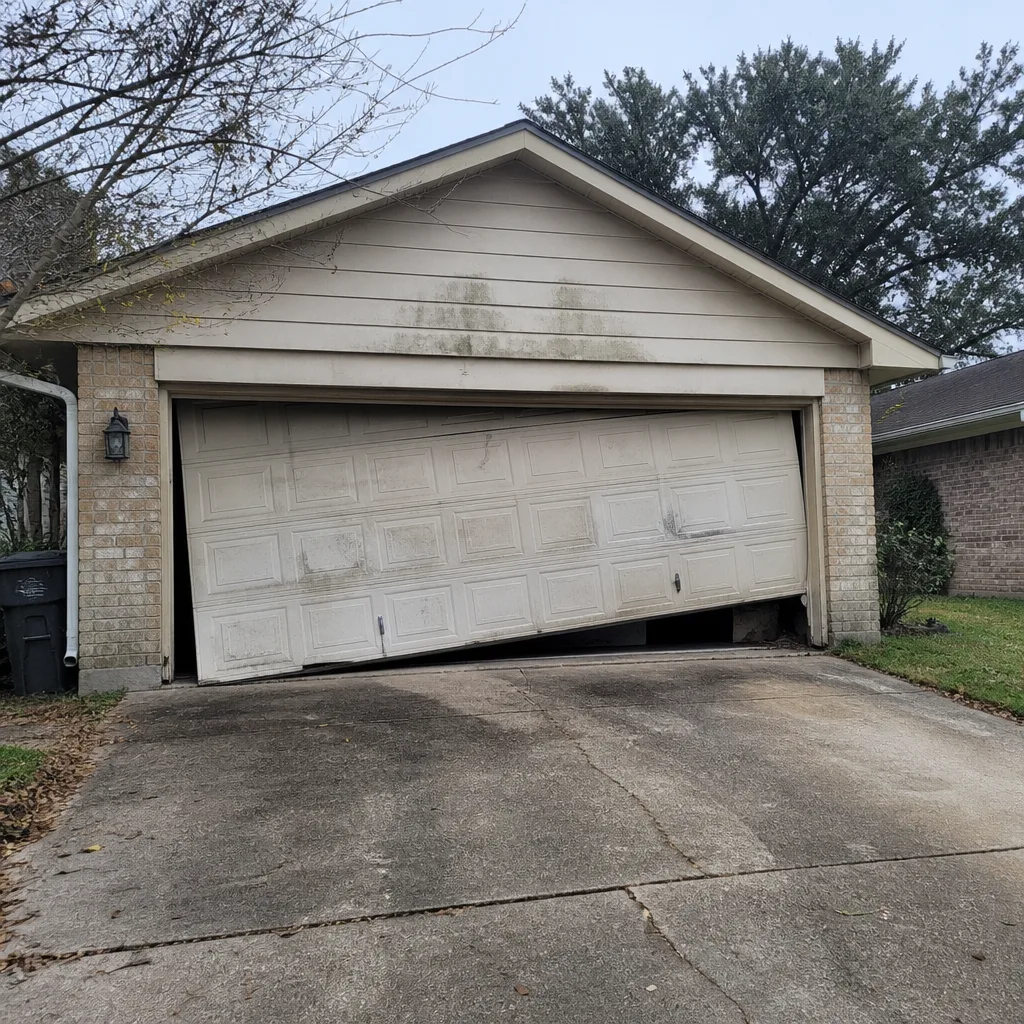 Before
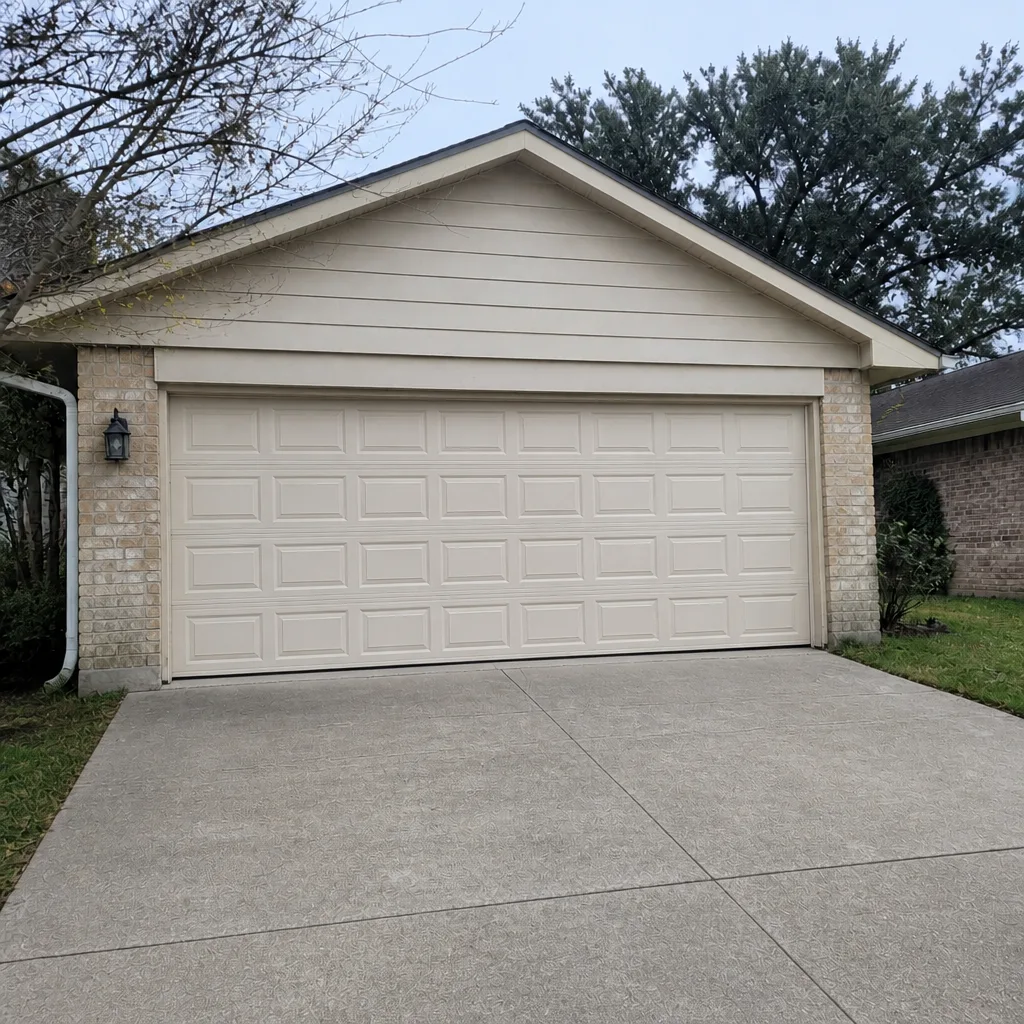 After
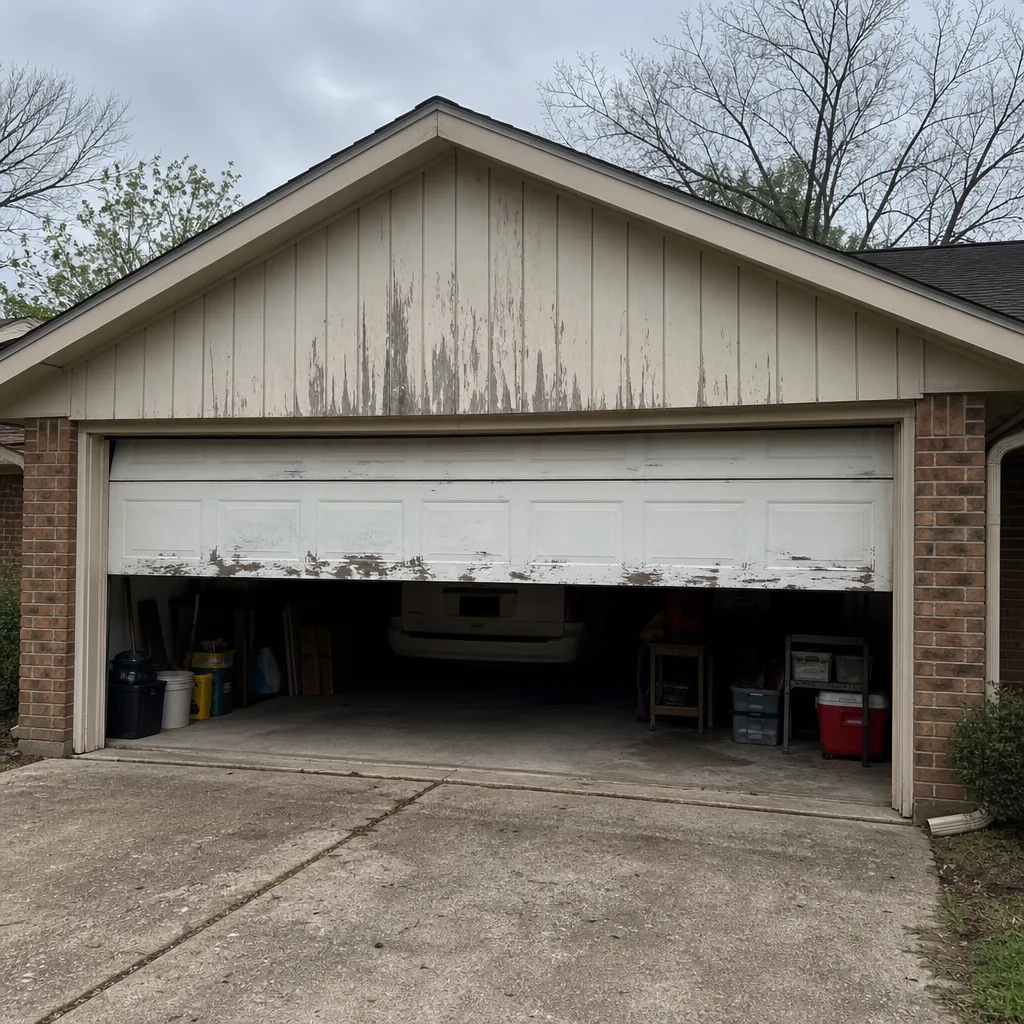 Before
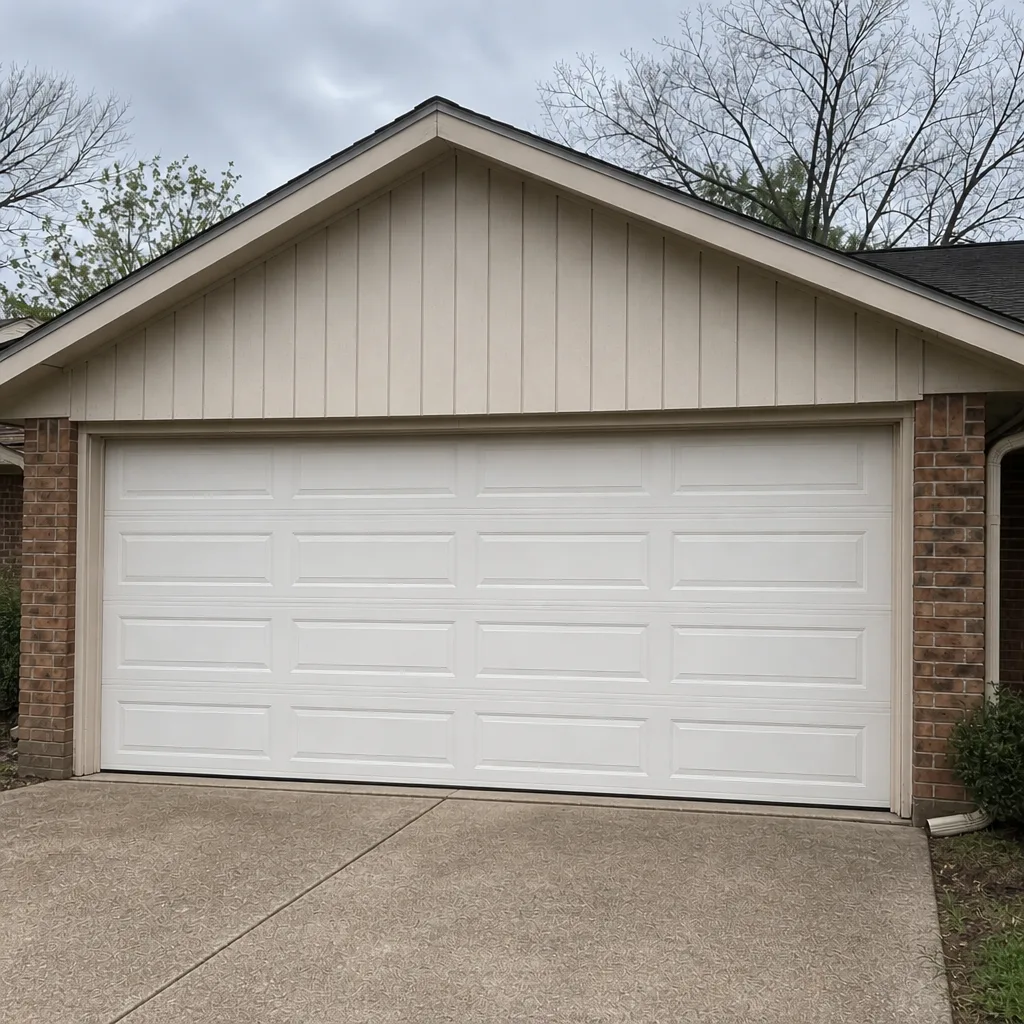 After
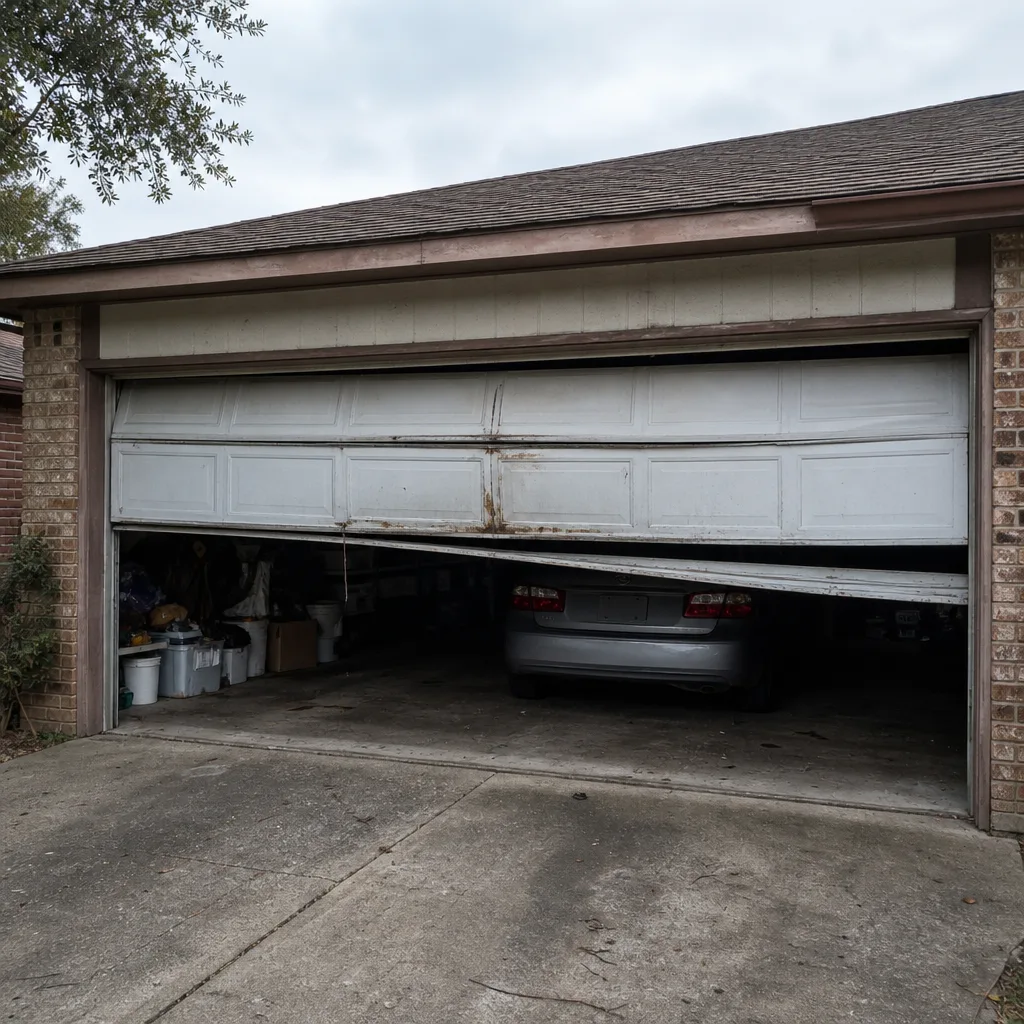 Before
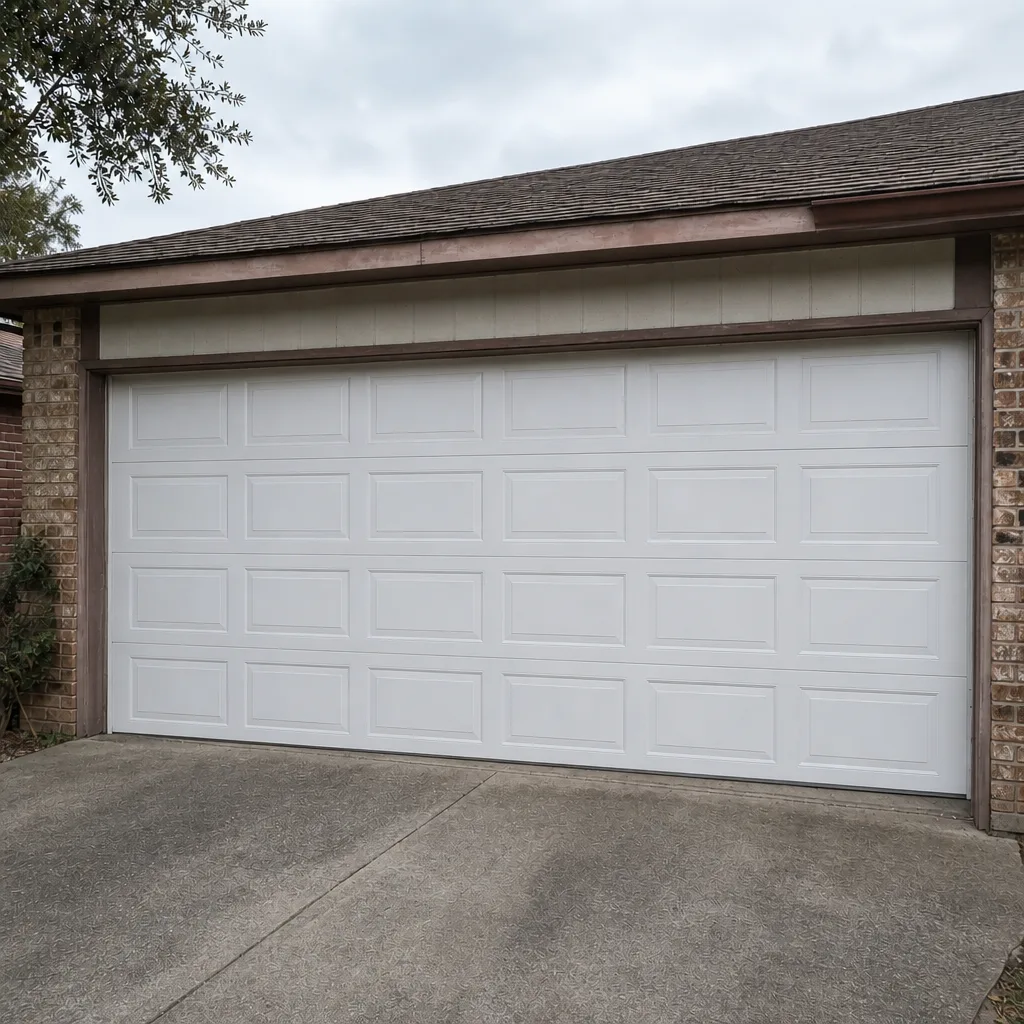 After
When to Call a Professional
Call a professional when the door is open and you cannot close it, when the door is hanging off a track, when a spring has visibly broken, when the car is trapped and you need it, or when a failure has left the home exposed. Also call when the same part has failed twice, when the door slams or drops, or when the opener refuses to disengage after a power outage. Those are the situations where guessing turns a repair into a replacement. League City Garage Door Repair Co offers free estimates in League City, and we work on the brand you already have across LiftMaster, Chamberlain, Genie, Clopay, Amarr, Wayne Dalton, Craftsman, and Raynor. Our technicians have up to 11 years of experience. We answer 24/7, with fast dispatch from 7am to 7pm, Sunday through Friday. Call (866) 937-7870.
Frequently Asked Questions
Pull the manual release handle to disconnect the opener, then lift the door by hand. Lower the door fully first if it is raised, because releasing a raised door lets it drop. If the door feels unusually heavy when you lift it, stop and call a technician, since that points to a spring problem rather than a power problem.
Only if the door is open and cannot be secured, the car is trapped, or the door is unsafe. A door that is fully closed and simply will not open is usually a scheduled repair. We answer 24/7 at (866) 937-7870, and we can tell you on the call whether it needs a technician now or a visit on a Sunday through Friday day.
Lower it manually if you can, or brace the opening with a firm board across the frame until someone can look at it. Do not force the opener or climb on a door that is off its track. Call us and we will get a technician out to close and secure the opening.
It helps for a limited number of cycles, not for the whole outage. A tested backup gets your car out for the first day or two; the manual release is what carries you through the rest. Test the battery before storm season every year, and keep the manual release reachable.
The price is set per job by the written estimate, and it is quoted and agreed before any work starts. Typical ranges depend on the failure: a broken spring is a different job than a carriage or a track repair. Call (866) 937-7870 for an exact quote; estimates are free.
No. The written estimate you agree to is the price, and no work begins until you have agreed to it. If the technician finds a second problem, they will tell you what it is and what it costs before doing anything about it, and you decide.
The Bottom Line
A garage door emergency in League City is almost always easier to manage when you have rehearsed the response in advance. Learn the manual release, test your battery backup on a schedule, know how to brace a stuck-open door, and have your service number where you can find it without power. Call now if the door is open and the home is exposed, the car is trapped, or a spring is broken; those are the situations worth treating as urgent. For everything else, book a scheduled visit. Springs, openers, panels, full installs: League City Garage Door Repair Co covers one call, and garage doors are all we do. Call (866) 937-7870 for a free estimate. We answer 24/7, with fast dispatch from 7am to 7pm, Sunday through Friday.
Written by the team at League City Garage Door Repair Co.