
Last updated November 21, 2026
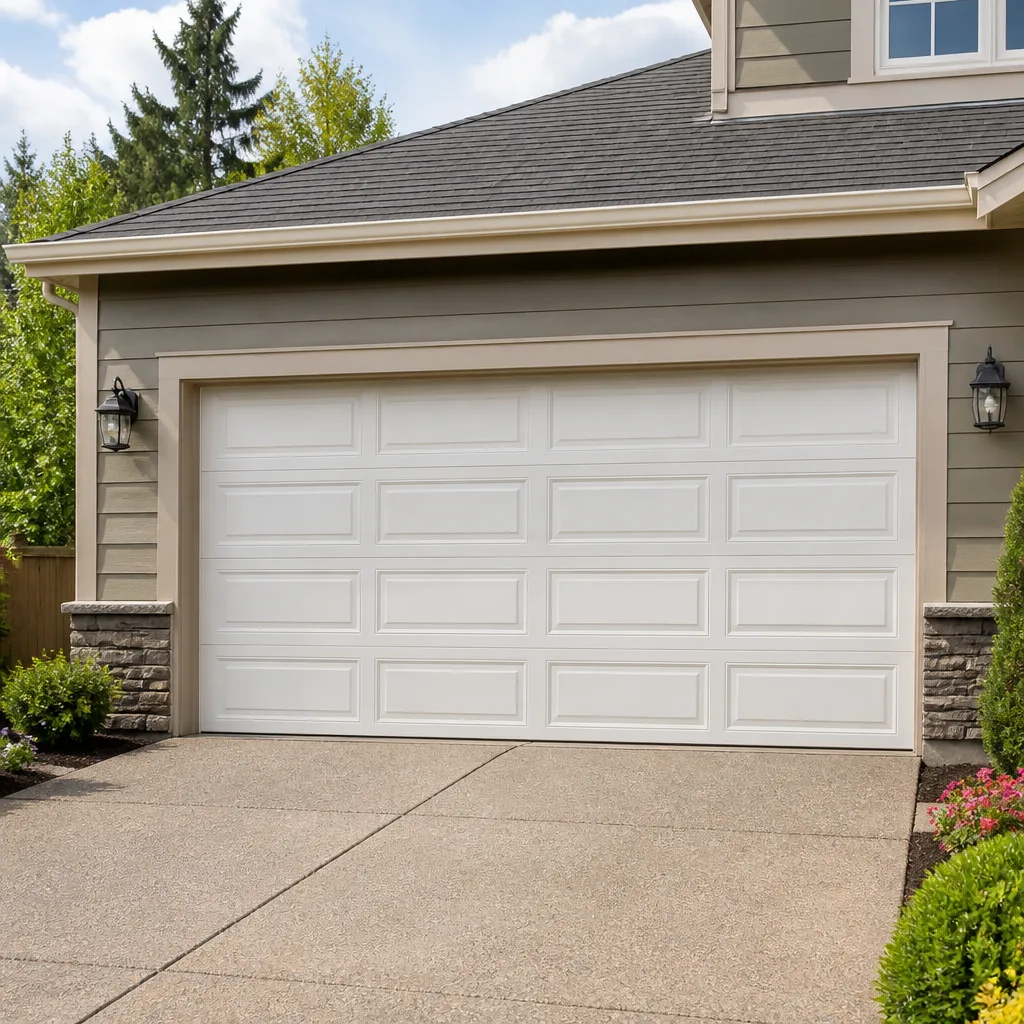 Raised-panel steel
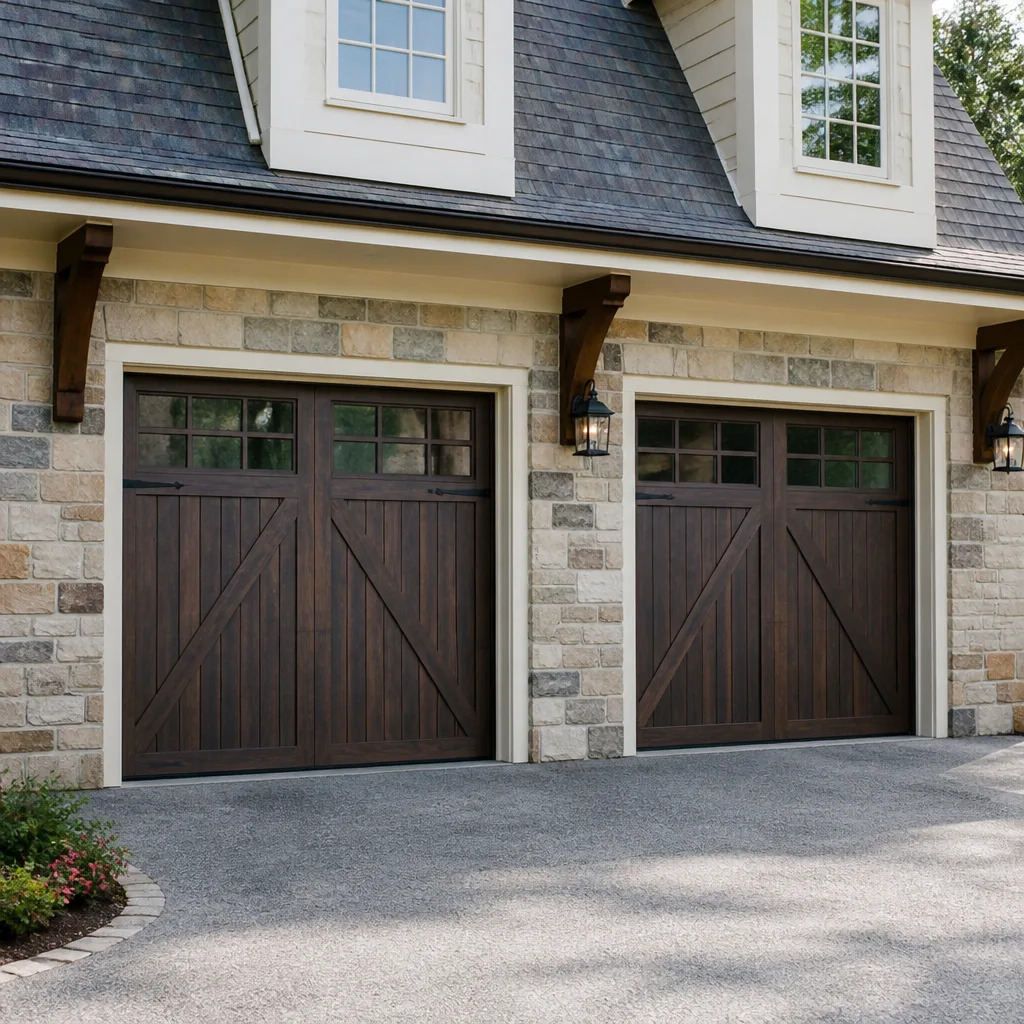 Carriage house
 Modern flush
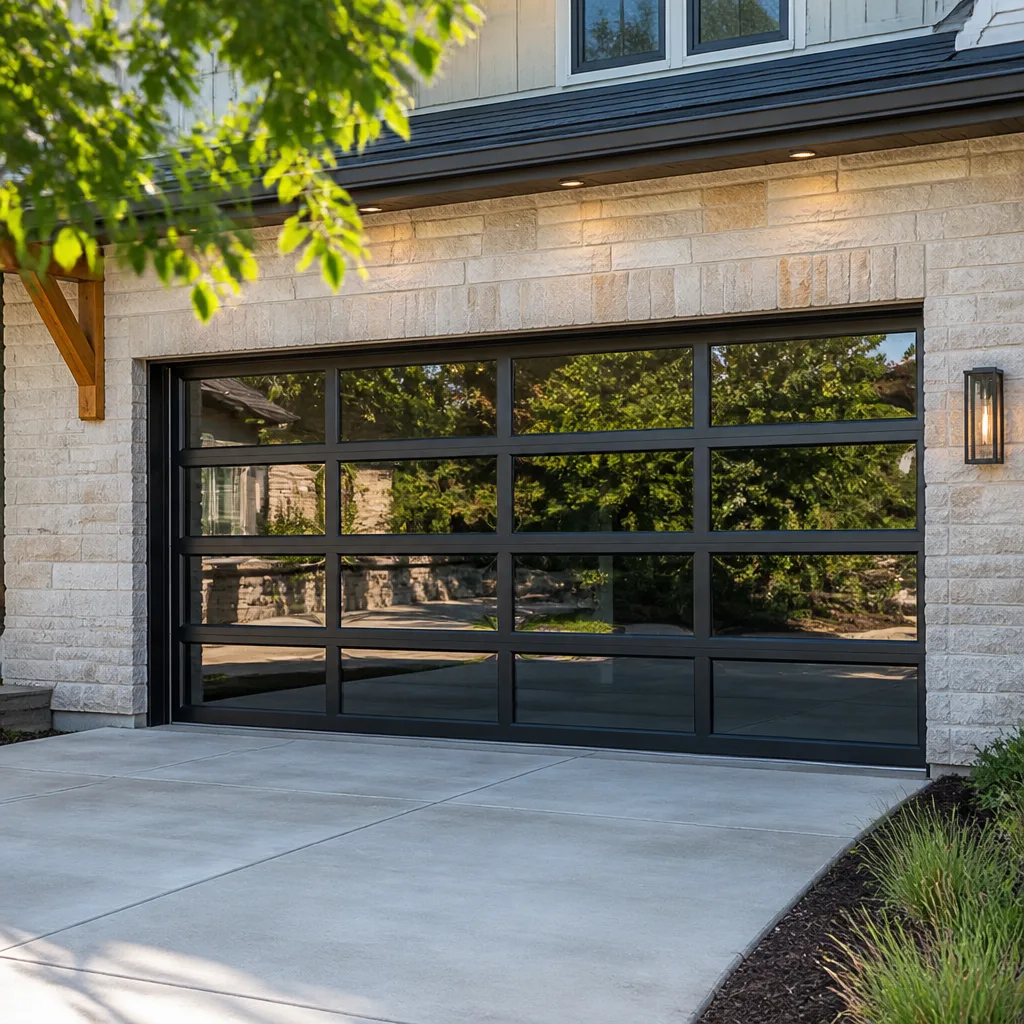 Full-view glass
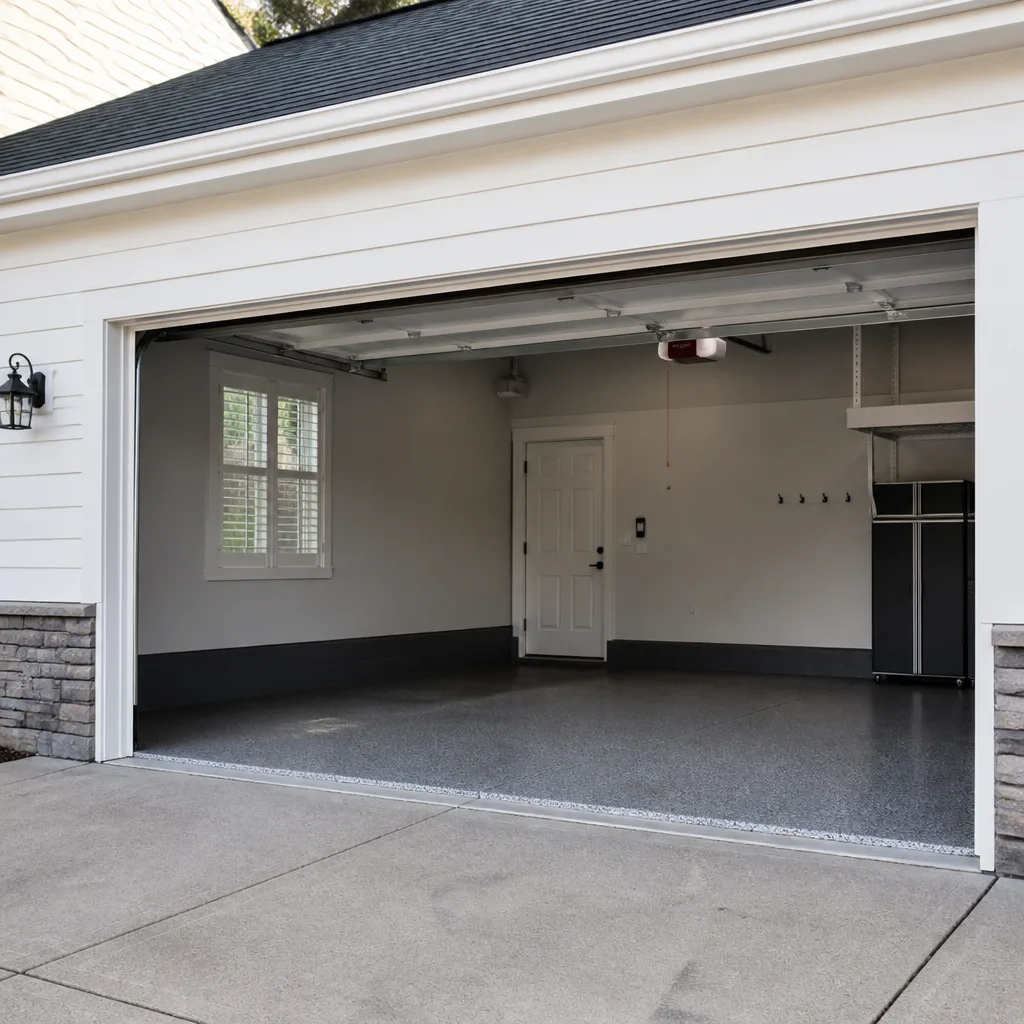 LiftMaster openers
 Chamberlain openers
Full 25-point door and opener safety check with every visit - springs, cables, rollers, tracks, and your LiftMaster or Chamberlain opener included
You get a price before we start. It does not change when the pro arrives.
Get your free estimateGarage Door Permits, Codes & Inspections in League City, TX: What You Need to Know
Here’s the part most homeowners get backwards: they assume a garage door is a private improvement, like a new fence or a repaved driveway, and that nobody needs to sign off on it. In League City, replacing a garage door is a structural and wind-load change to the building envelope, and that puts it in a different category. Swap the door on a house across League City and you’ve altered an assembly the building code treats as part of the wind-resisting system. This guide explains exactly when a permit is required here, what the inspection covers, how to check work a previous owner had done, and how an unpermitted door can surface at the worst possible moment: closing day, or the week after a storm claim.
Quick Answer
In League City and the rest of Galveston County, a full garage door and track replacement on an existing opening almost always requires a building permit, because the door assembly is part of the wind-resisting envelope that Texas wind code governs. Routine repair work, such as replacing springs, cables, rollers, panels or an opener on an existing door, generally does not require a permit. Never rely on a general rule you read online, though: call the City of League City’s building department and confirm the requirement for your specific address before any door goes on order.
Styles & brands we work with
- Raised-panel steel
- Carriage house
- Modern flush
- Full-view glass
- LiftMaster openers
- Chamberlain openers
Table of Contents
- When does a garage door project need a permit in League City?
- Repair, replacement and new construction: where the line falls
- Texas wind load requirements and what a compliant installation looks like
- What the inspection actually involves, and how long it takes
- How to verify permit status on work a previous owner had done
- How unpermitted garage door work affects insurance claims after storm damage
- What to do when it comes up at closing
When does a garage door project need a permit in League City?
A garage door replacement needs a permit when the work changes the door assembly itself: new door sections, new track and brackets, a new torsion or extension spring system, or a change in size or model. It generally does not need one when you’re repairing existing components without altering the opening. That’s the plain-language version. The precise answer depends on the scope you describe, and the department that decides is the City of League City’s permitting office, so the correct first move on any replacement is a phone call to them rather than an assumption.
Several factors push a project across the permit line:
- Weight and spring change. A new door’s weight often requires a different spring and hardware set. That’s a structural change to the opening, not a cosmetic one.
- Wind-load rating change. A new door model may carry a different design pressure rating than the one it replaces. The permit process is how that rating gets documented for the property record.
- Track or header modifications. Any alteration to the framing, header or anchorage is construction work, not a parts swap.
- Converting an opening. Turning a carport opening into an enclosed garage, or changing a door’s dimensions, definitively requires a permit.
What generally stays exempt is the work most people actually call us for. A snapped torsion spring, a cable that’s slipped off the drum, a bent roller, a dead opener motor: these are replacements of wear parts on a code-compliant opening, and the City of League City’s process isn’t built for that kind of ongoing maintenance. If you’re in a neighborhood like Tuscan Lakes or Mar Bella and your door came off its track after a hard blow, that’s repair work. If you’re putting a wholesale new door assembly on the same framing, plan for the permit conversation. Our garage door repair work is scoped so you know which one you’re dealing with before anything starts.
Why the distinction matters here specifically
Galveston County sits in a wind zone that gives local permitting offices a genuine reason to care about the exterior envelope. Inspectors aren’t checking a garage door to be inconvenient. They’re confirming that an assembly rated to resist wind pressure was installed the way the manufacturer says it must be installed. A general rule from a forum in another state won’t tell you what applies at your address in League City, so treat local confirmation as the only confirmation.
Repair, replacement and new construction: where the line falls
The confusion we hear most in League City comes from homeowners using “replace” to mean three different jobs. A spring replacement, a door replacement and a new garage build are not the same category, and only one of them is routine permit work. Here’s how we sort them in conversation.
Category 1: component repair or replacement (usually no permit)
This covers springs, cables, rollers, hinges, drums, bottom seals, and openers and their drive systems. You’re renewing parts of an existing, already-approved assembly. No change to the opening, no change to the wind rating, no permit process to speak of. Our garage door spring repair sits here, and so does most garage door opener repair.
Category 2: full door and track replacement (usually permit required)
New door sections, a new track, new torsion hardware and new anchorage is a replacement of the wind-resisting assembly. This is the category that should trigger a permit conversation with League City before you order. We bring it up before a job is scheduled, not after, because ordering the door and then discovering the permit was required is a far more expensive problem than the permit itself.
Category 3: new construction or opening modification (permit required)
Adding a garage door to a wall that didn’t have one, widening an opening, or building a new attached or detached garage with a door: all of it is permit work. This isn’t optional or negotiable. It’s construction.
The short version, as a numbered sequence
- Describe your job to the City of League City’s building department in plain terms: door model, whether track and hardware are changing, whether the opening size changes.
- Ask directly: does this scope require a permit at this address?
- If yes, confirm who pulls it. The contractor performing the work normally files for and holds the permit.
- Get the permit number in writing before installation begins.
- Keep the inspection record with your home documents. You’ll want it if you sell.
A permit isn’t a comment on the quality of your existing door. It’s a record that the new assembly met the standard. On resale, that record does work for you.
Texas wind load requirements and what a compliant installation looks like
Garage doors are the largest opening in a house, and in Galveston County wind design pressure governs how a door and its anchorage must be rated and installed. What that means in practice is that a compliant installation is a system: the door’s rated design pressure, the track and its fasteners, and the attachment to the framing all have to work together. A heavyweight door hung on undersized brackets isn’t compliant no matter how good the door is.
That’s a large part of why we work specifically with Clopay and Amarr doors. These manufacturers publish wind-load ratings for their models and the installation instructions that go with them, and matching a rated door to a rated installation is exactly the documentation the permit and inspection process asks for. When a door is specified properly, the paperwork largely writes itself.
What to look for in a compliant install
- A rated door model matched to the opening’s requirements, not a door chosen purely on looks or price.
- Correct fasteners in the correct locations. Anchorage to framing, not to sheathing alone.
- Track and brackets consistent with the door’s weight and rating. A heavier door needs heavier track and bracketing.
- Installation following the manufacturer’s printed instructions. Not a slightly different method that happens to work.
- Paperwork you can hand to an inspector. Model number, rating, install date, permit number.
The reason garage door wind performance gets scrutiny in Galveston County is straightforward: when wind pressure pushes against a house, a door that fails becomes an opening. A properly rated and anchored assembly resists that. An unrated door, or a rated door installed with the wrong anchors, doesn’t get the benefit of the rating. If you’re replacing a door in League City, ask for the rated model number in writing before installation, and keep it with your home records. If you’re still deciding what to put on the opening, our League City Garage Door Repair Co team can talk through rated options for your house.
What the inspection actually involves, and how long it takes
Most homeowners imagine a garage door inspection as a dramatic event. In practice it’s a short, focused check of the things the permit exists to verify: that a rated door was installed, that it was anchored correctly, and that the assembly operates safely. The inspector isn’t testing your opener remote or admiring your paint. They’re confirming the assembly matches what was permitted.
The typical sequence
- Your contractor pulls the permit before installation and posts it on site.
- The installation is completed and the door is balanced and adjusted.
- Your contractor requests the inspection, usually for the next available slot in the City of League City’s permitting schedule.
- An inspector visits, checks the door model and rating, anchorage, and operation, then signs off.
- You receive or keep the inspection record with your home documents.
How long this takes depends on the City of League City’s workload that week and the inspection calendar, so the honest answer is to ask the building department directly when the permit is filed. What we can tell you is what to have ready so the inspection doesn’t stall: the permit number, the door model and rating documentation, and a clear path to the door. If a rated model number is on the paperwork and the installation matches it, the inspection tends to be unremarkable. That’s the point.
When we schedule a replacement, we build the inspection into the plan from the start. Our technicians have up to 11 years of experience, which includes working through this process on rated assemblies in this part of Texas.
What an inspection does not cover
An inspection doesn’t approve your opener, your springs as a standalone component, or how quiet the door is. Those are service and function items, not code items. That’s why a passed inspection isn’t the same thing as a well-maintained door.
How to verify permit status on work a previous owner had done
If you bought a house in League City and you don’t know whether the garage door replacement was permitted, you’re not alone. The practical move is to check with the City of League City’s building department and ask them to search the property record for permits and inspections on the garage. You’ll need your address and often the legal description.
Step-by-step
- Locate your closing documents. Permit records are sometimes disclosed in the seller’s disclosure or title paperwork.
- Contact the City of League City’s building department and ask for the permit history on your address.
- Ask specifically about permits on the garage door or the garage structure.
- If a permit exists and shows a passed inspection, keep a copy with your home records.
- If no permit exists and the door looks like a later replacement, ask what the department requires to resolve it.
What to do if the work wasn’t permitted
The fix depends on what was installed and how the department handles unpermitted work. In general terms, the options run from a permit being filed after the fact, with an inspection of the existing installation, to correction of anything the inspector finds non-compliant. The path forward is set by the City of League City, not by guesswork. The important thing is to find out before a sale or a claim forces the question.
If you discover the door was installed without a permit, don’t panic and don’t assume you have to take it off. Start with the building department and get their answer in writing. Then, if a correction is needed, we can inspect the installation, tell you what’s non-compliant, and handle it. That’s a door-replacement conversation, not a repair, and we scope it as one.
How unpermitted garage door work affects insurance claims after storm damage
An insurer’s job is to pay for what’s covered. That means the claim has to line up with what was actually installed on the house. When a garage door was replaced without a permit and the rated assembly isn’t documented, a storm-damage claim can get complicated. The insurer may question whether the door was installed to the standard the policy assumes, or dispute the scope when there’s no record of the rated model on the property.
We’ve seen this show up after major wind events in the region, and it’s avoidable. A permit record with a passed inspection is documentation. It tells the insurer, the inspector and any future buyer that the assembly was installed per a rated specification.
Steps to keep the claim side clean
- Permit before installation. Not after. The record is only clean when the paperwork precedes the work.
- Keep the rated model number and manufacturer documentation. This is the identity of the assembly your policy is insuring.
- Keep the inspection sign-off. Save it with the rest of your home records.
- Document repairs too. Springs, cables and openers don’t need permits, but keep receipts. Ownership history helps when a claim question comes up.
- Talk to your insurer’s claims line if you’re not sure. They’ll tell you what documentation they need for the garage.
We don’t bill insurance on your behalf, but we can work with your insurer and provide the installation and rated-model documentation a claim needs. If a storm has already damaged your door, we handle the repair side and arrange the documentation for the replacement.
What to do when it comes up at closing
A title search can surface an unpermitted improvement, and when a garage door replacement is the last undisclosed item, it can put a sale at risk on the closing calendar. That’s the scenario that makes this topic worth reading before the door is installed rather than after. The fix is available, but it’s a chore at the worst possible moment, and it can cost more in time than it would have as part of the original job.
The closing-crunch playbook
- Get the actual record. Ask the City of League City’s building department for the permit history on your address. Don’t rely on the seller’s memory.
- Ask what the department requires to resolve it. Late-filed permit, corrective inspection, or correction of non-compliant items are the likely paths.
- Get a written scope from a garage door specialist. If the door needs to come out and go back in to bring it into compliance, you want the scope and the schedule in writing.
- Loop in the title company early. Tell them what you found and what you’re doing about it.
- Keep every document. Permit, inspection, manufacturer’s rating sheet, receipts.
Sellers in League City who are honest and proactive about the door tend to resolve this faster than sellers who hope it doesn’t come up. There’s no upside to the wait-and-see approach here.
Common Mistakes to Avoid
- Assuming a replacement of “the same size” doesn’t need a permit. Size is one factor; the door’s rated assembly and hardware change the scope, and the City of League City’s department is the one that decides.
- Ordering the door before checking on the permit. Once the door is on order and scheduled, discovering a permit is required can delay the install and add cost. Check first.
- Skipping the documentation. A rated model number and a passed inspection are the only things that cleanly resolve a future claim or sale. Toss them and you’ve lost the proof.
- Hiring a generalist who guessed at wind requirements. A door installer who doesn’t know what a rated assembly looks like is a liability on a Galveston County property. We specialize in garage doors and work to rated specifications.
- Trying to install or repair the springs and cables yourself. The torsion springs and cables under load are the most dangerous parts of the system. This isn’t a homeowner job. Call a trained professional.
- Assuming a passed inspection means the door is maintained. It doesn’t. Springs, cables and rollers wear out after the inspection, and they’re not covered by it.
- Ignoring the permit history when you buy a house in League City. A pre-closing permit search on the garage costs you a phone call. Not doing it can cost you a closing date.
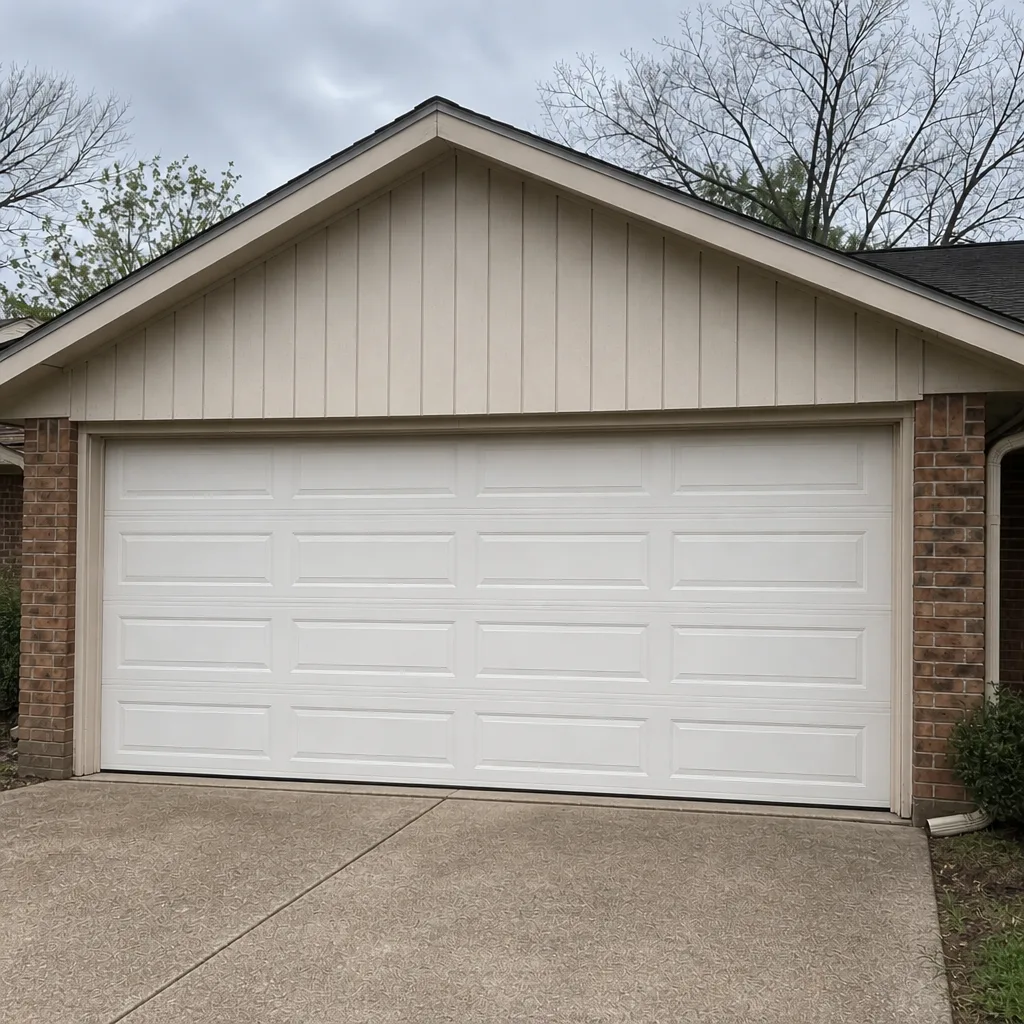
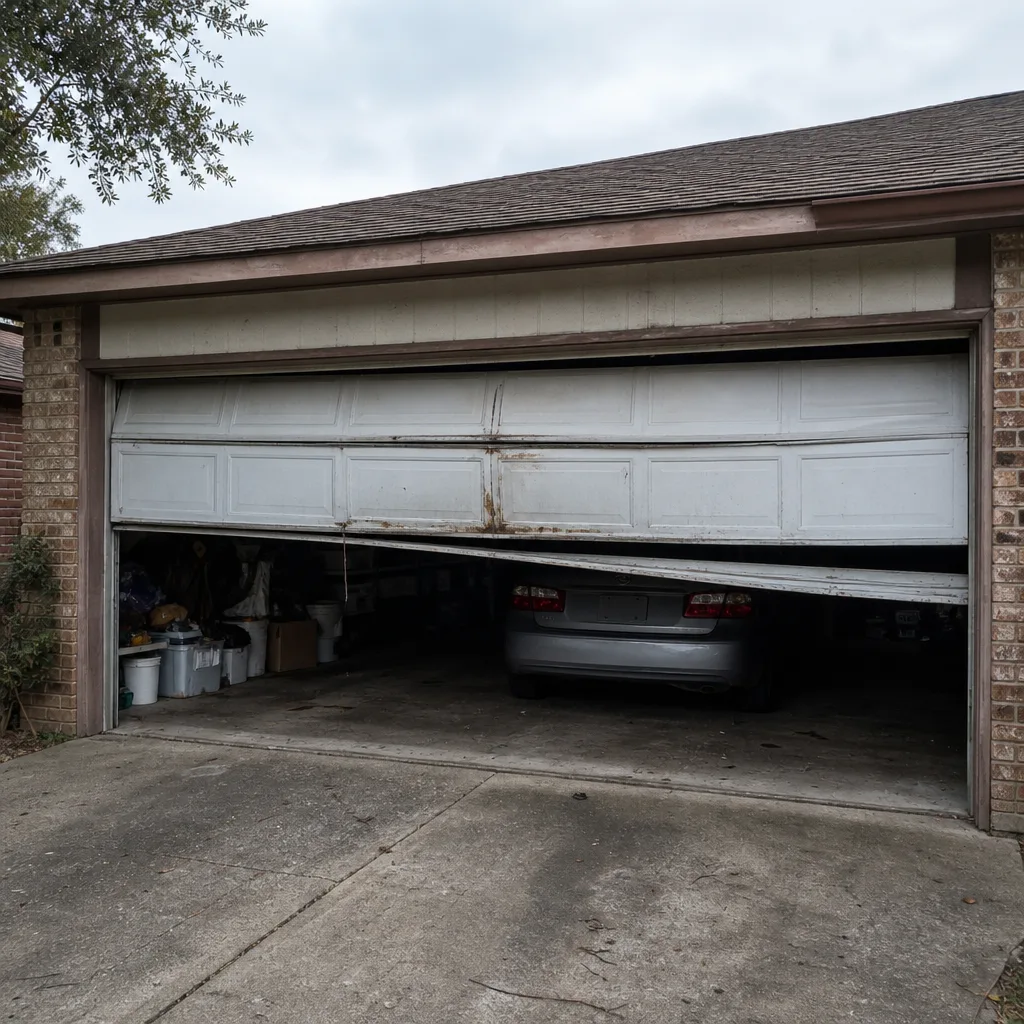
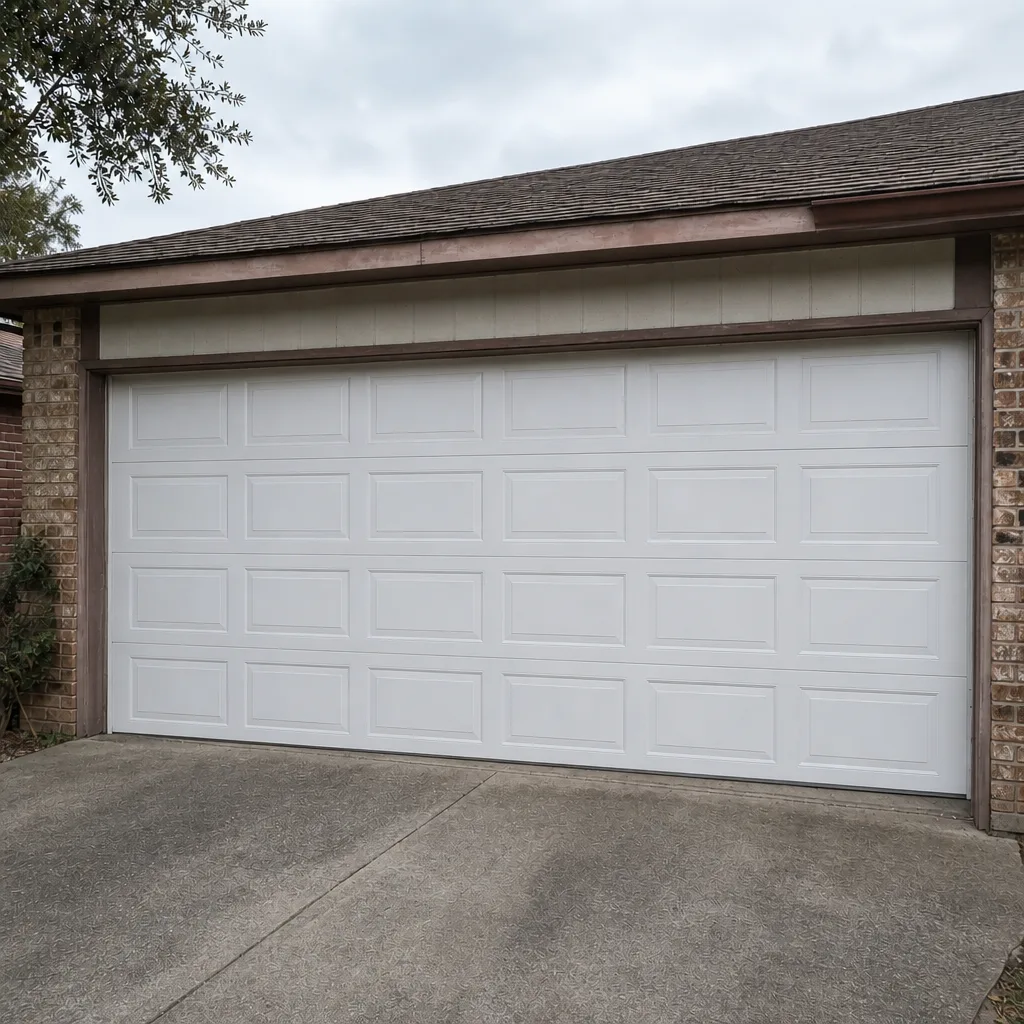
See the difference
 Before
 After
 Before
 After
 Before
 After
When to Call a Professional
Call us when the question is bigger than a phone call to the permitting office can settle: a replacement you’re planning and want scoped properly, a door that’s come out of its tracks after a wind event, a permit history you found that leaves you uneasy, or a spring that has snapped and left the door inoperable. Those jobs need a trained eye on the assembly and someone who knows how rated installation works, not a handyman guessing at the specification. The same goes for anything involving torsion springs, cables or the door’s overhead mechanism: those parts are under load and can cause serious injury, so they belong to a trained professional.
We specialize exclusively in garage doors, not in handyman or multi-trade work, and we work on the brand you already have: Clopay, Amarr, Wayne Dalton, Craftsman and the rest of the eight major door and opener brands. Whether you need a repair scoped or a permit-ready replacement planned, League City Garage Door Repair Co offers free estimates in League City. Call (866) 937-7870. We answer 24/7. Fast dispatch from 7am to 7pm, Sunday through Friday. We’re closed Saturday, so a call on Saturday is booked into the next opening.
Frequently Asked Questions
A full garage door and track replacement on an existing opening usually does require a permit in League City, because the door assembly is part of the wind-resisting envelope the Texas wind code governs. Routine repair of springs, cables, rollers or an opener generally does not. Confirm with the City of League City’s building department for your specific address before the door is ordered. Call (866) 937-7870 for an exact quote on a replacement – estimates are free.
Replacing springs, cables, rollers, hinges, drums, seals or an opener on an existing door is normally maintenance work and doesn’t need a permit. What changes the answer is whether the door assembly, track, hardware or opening itself is being altered. If the scope is a replacement, it’s a permit question. If it’s a repair, it usually isn’t. When in doubt, a quick call to the City of League City’s building department settles it, and you can call us at (866) 937-7870 to talk through the scope of the repair.
Garage doors in Galveston County must be installed as a rated assembly that resists wind design pressure: a door model rated for the opening, installed with track and anchorage matching its weight and rating, following the manufacturer’s instructions. A compliant install is a system, not just a door. Rated models from Clopay and Amarr come with the wind-load documentation the permit and inspection process asks for. For a free estimate on a rated replacement, call (866) 937-7870.
Ask the City of League City’s building department for the permit history on your address, especially any permits on the garage door or garage structure. Check your closing documents first for any disclosed permits, then get the department’s record. If a permit exists with a passed inspection, keep a copy. If not, ask the department what’s required to resolve it. We can inspect the installation once you know where you stand: (866) 937-7870 for a free estimate.
It can. An insurer’s ability to pay a storm-damage claim cleanly depends on documentation that a rated assembly was installed to the required standard. An unpermitted installation with no record can raise questions about what was installed and to what specification, which can complicate the scope of a claim. A permit record with a passed inspection is the documentation that prevents that. We can work with your insurer and provide rated-installation documentation. Call (866) 937-7870 for an estimate.
The scheduling depends on the City of League City’s inspection calendar that week, so the honest answer is to ask the building department when your permit is filed. The inspection itself is a focused check of the door model and rating, anchorage and operation. If the rated documentation is on the permit and the install matches it, it’s usually unremarkable. We build the inspection into the instal plan from the start. For a free measure and written price, call (866) 937-7870.
No. We quote the job before any work starts, and the price is set by the written estimate you agree to. If the scope changes during the job because of something we find, we’ll tell you and get your agreement before the extra work begins. That’s how we do every job in League City. Call (866) 937-7870 for a free estimate.
The Bottom Line
In League City, the permit line falls between repair and replacement, and the City of League City’s building department is the authority that decides which side of it a job is on. Full door and track replacements on a Galveston County home are construction work with wind-resistance implications, and the permit and inspection process is the record that proves it was done correctly. Unpermitted work can surface at a title search, a sale, or a storm-damage claim. If you’re replacing a door, pull the permit before the order, keep the rated model documentation, and save the inspection sign-off. If you’re repairing springs, cables or an opener, you don’t need the permit, but you do need a trained professional handling the dangerous parts. We handle both ends of that conversation in League City, and we’re glad to help you get it right.
Written by the team at League City Garage Door Repair Co.